
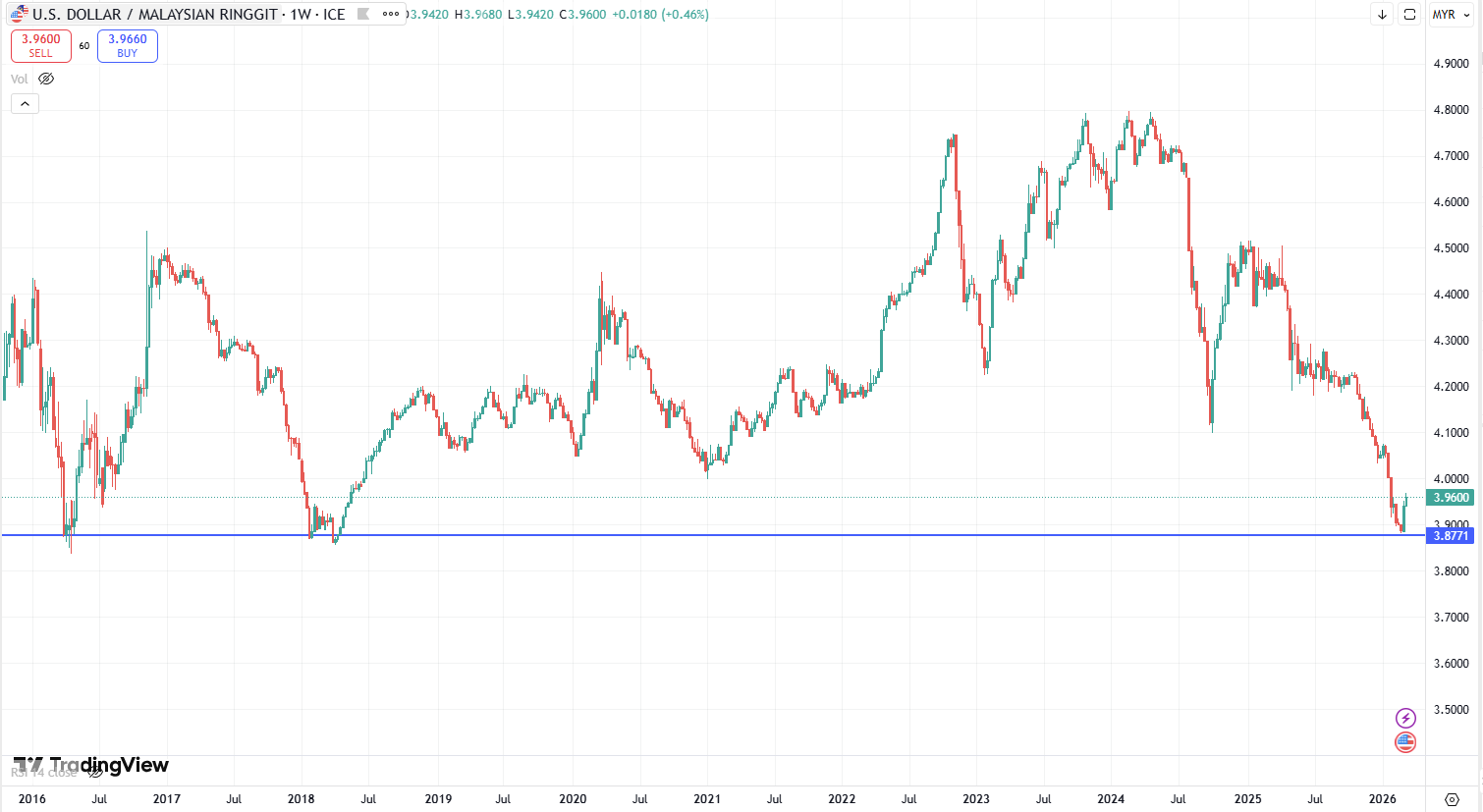
On February 3rd , once again ASIAN best performing currency in 2025, the Malaysian Ringgit strengthened against major global currencies and recently touched around 3.93 versus the US dollar — the strongest level since 2018.
The US dollar has weakened significantly, falling to around 97 on the DXY , its lowest level since the early Trump era. As the dollar loses momentum, investors have increasingly shifted capital toward higher-return and alternative assets, such as gold and US equities, both of which have reached all-time highs in recent months.
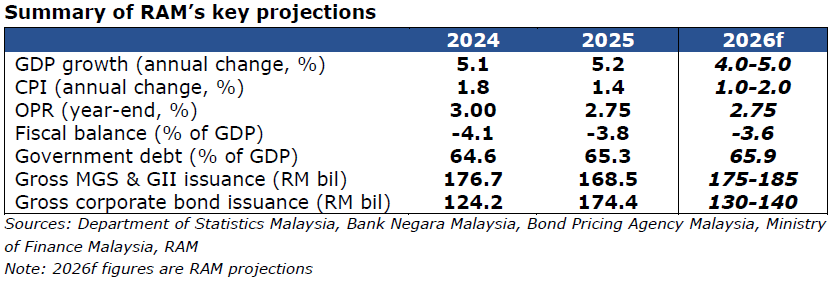
Interest rates also play a role. Bank Negara Malaysia recently kept its policy rate unchanged at 2.75%, while expectations of lower US interest rates have reduced the appeal of holding US dollars, supporting MYR appreciation.
Malaysia’s economic fundamentals have also contributed to the strengthening of the Ringgit. The country recorded a full-year GDP growth of 5.2%, exceeding the initial estimate range of 4.0%–5.0%, signalling stronger-than-expected economic momentum.
This growth has been supported by strong exports, which bring more foreign money into Malaysia and increase demand for MYR. In addition, rising foreign investment in AI data centres has further supported the Ringgit, as these large projects involve overseas funds that need to be converted into MYR.
The Good
IOS users, are you guys ready for a cheaper Iphone 18? Since most electronic products and gadgets are imported, a stronger MYR means lower import costs, which can eventually translate into lower retail prices for consumers. Here are Iphone price in Malaysia Ringgit comparison between last 10 editions.
For overseas travellers, you can experience a better exchange rate. It could be vacation or study, where overseas travellers get more spending power abroad. Remember Thai baht (THB) used to be 10 against 1 for MYR , well thats 12 years ago in 2014. We will see if Malaysian Ringgit strengthens in the coming years.
Positive news for industries like construction and automotive that rely heavily on imported commodities. When the MYR strengthens, the cost of imported materials may fall. Lower input costs can help improve company profitability and reduce price pressure.
The Bad
Well , salt is necessary, but too much salt is unhealthy.
Similarly, a stronger MYR can be both good and bad, depending on how far and how fast it rises.
Malaysia is more export-driven than import-driven. The country relies heavily on exports such as electronics and manufacturing products. A stronger MYR can make these goods more expensive for overseas buyers, which may affect demand.

A special mention goes to exports such as palm oil, as Malaysia is the world’s second-largest producer and exporter. During periods of MYR strength, export earnings may decline when converted back into Ringgit, even if global prices remain stable.
Another possibility is increased pressure on multinational companies (MNCs) operating in Malaysia. Many of these firms earn revenue mainly in USD, while a large portion of their costs are in MYR. A stronger Ringgit can squeeze profit margins, which may lead to cost-cutting measures such as slower hiring or potential layoffs if currency strength persists.
The Malaysian Ringgit has not only strengthened against the USD, but also against other currencies, including the Singapore Dollar. Malaysians working in Singapore or earning income in SGD or USD may see their purchasing power decline when converting their earnings back into MYR, especially as the Ringgit stands out as one of Asia’s top-performing currencies.
Future
So will the Malaysian Ringgit keep strengthening ? Well lets see some expert analysis on the movement of our currency.
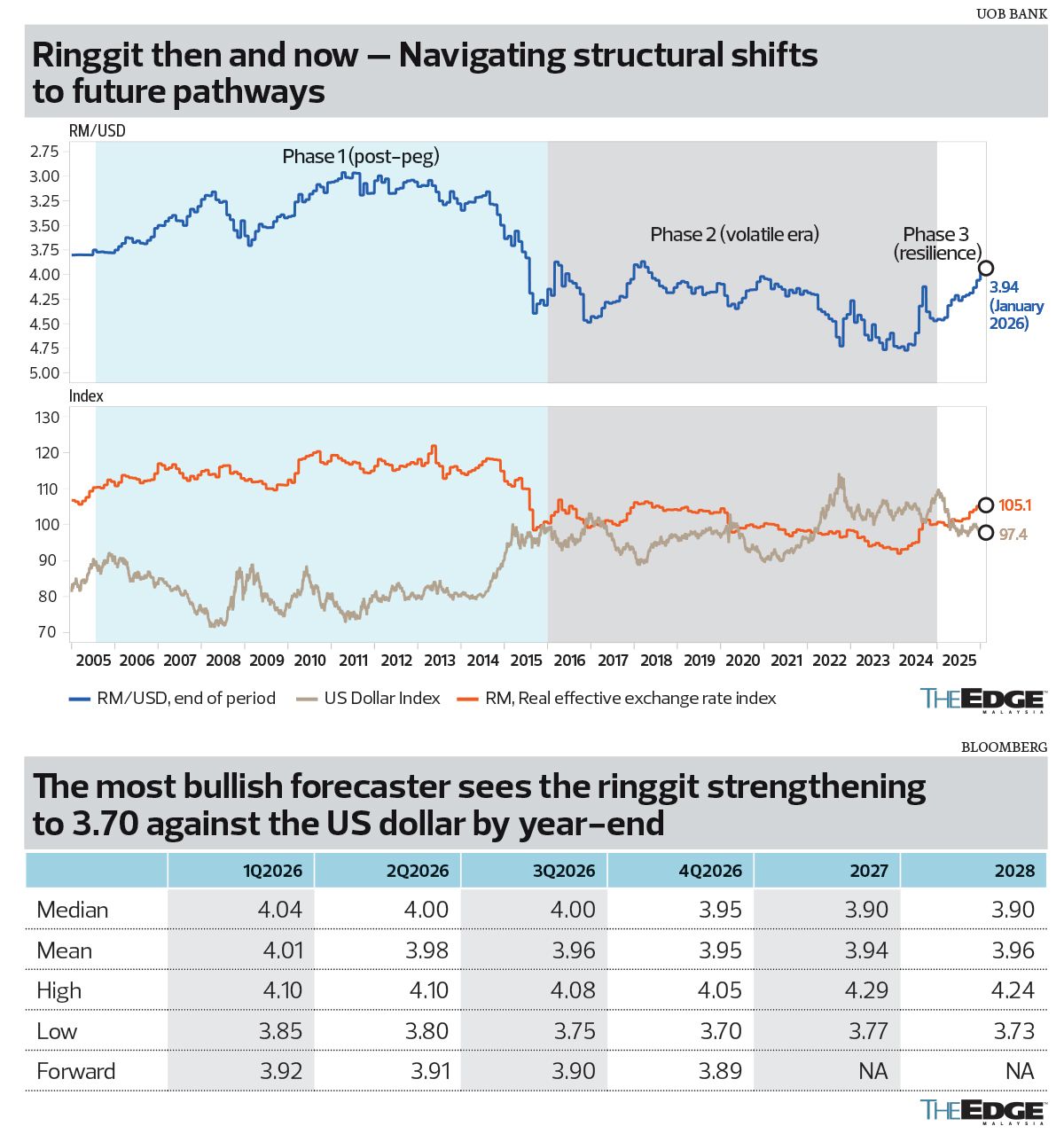
According from the Edge Report , there were splits between forecaster about Malaysian Ringgit headings, with the most bullish ones see the ringgit strengthening to 3.70 againist USD by end of 2026.
My POV
From my perspective though , i think its good time to invest in USD assests, With USD weaken ,foreign assets such as US stocks and even crypto may become cheaper to access in Ringgit terms, lowering the currency barrier for Malaysian investors. That said, currency strength alone should never be the sole reason for investment decisions.